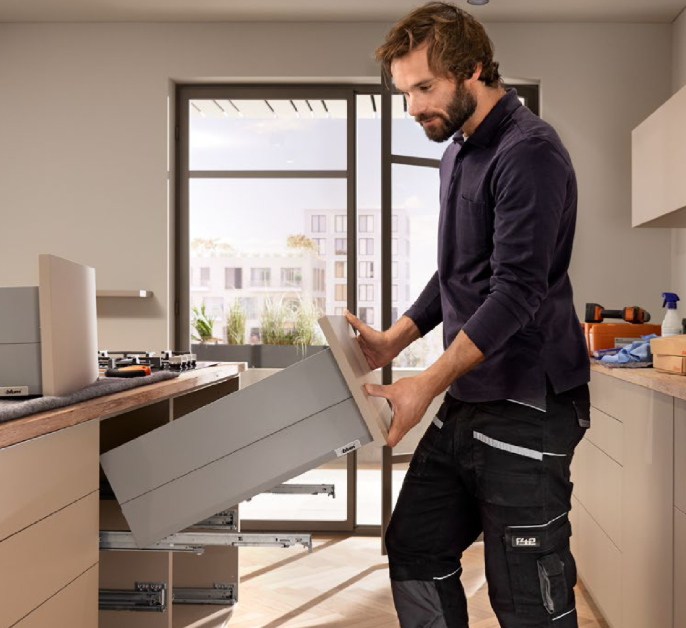

Replacing your drawer slides is one of the fastest ways to make cabinets feel brand new. If your drawers stick, sag, squeak, or slam shut, new slides can restore smooth operation or add premium features like soft close.
This guide walks you through how to identify your current slides, measure correctly, choose replacements, and install them with confidence.
Why Replace Drawer Slides?
Most homeowners upgrade for one of these reasons:
- Broken or worn slides
- Squeaking, sticking, or grinding drawers
- Drawer sag or poor alignment
- Desire for soft-close performance
- Full extension for better access
- Higher weight capacity
Among kitchen upgrades, switching from basic slides to soft-close models delivers one of the biggest daily quality-of-life improvements.
Step 1: Identify Your Current Slide Type
Before buying anything, determine what you already have. Your cabinet and drawer construction usually limits what you can install.
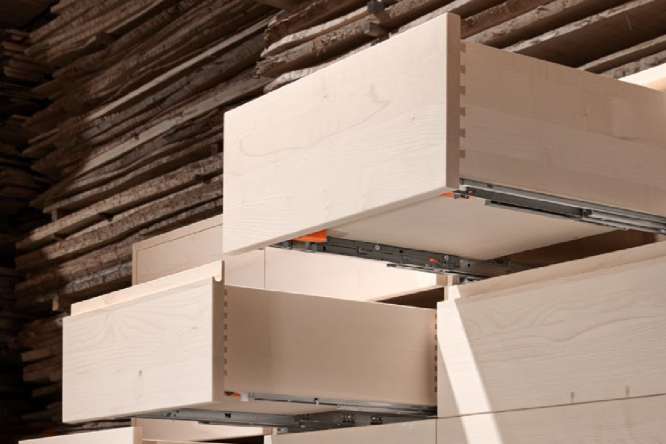
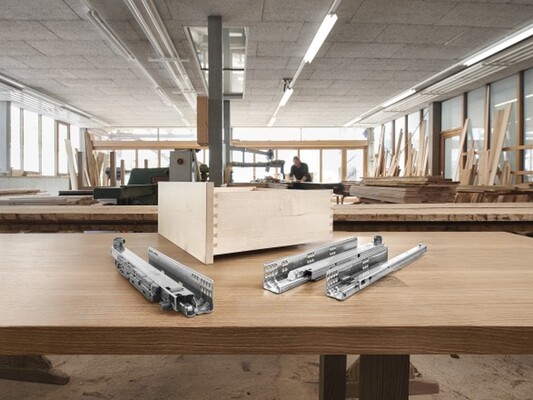
A) Undermount Slides (Hidden)
- Mounted beneath the drawer box
- Invisible when drawer is open
- Common in newer cabinets
- Typically soft close
Upgrade options: Replace with similar undermount slides only (unless you build new drawers)
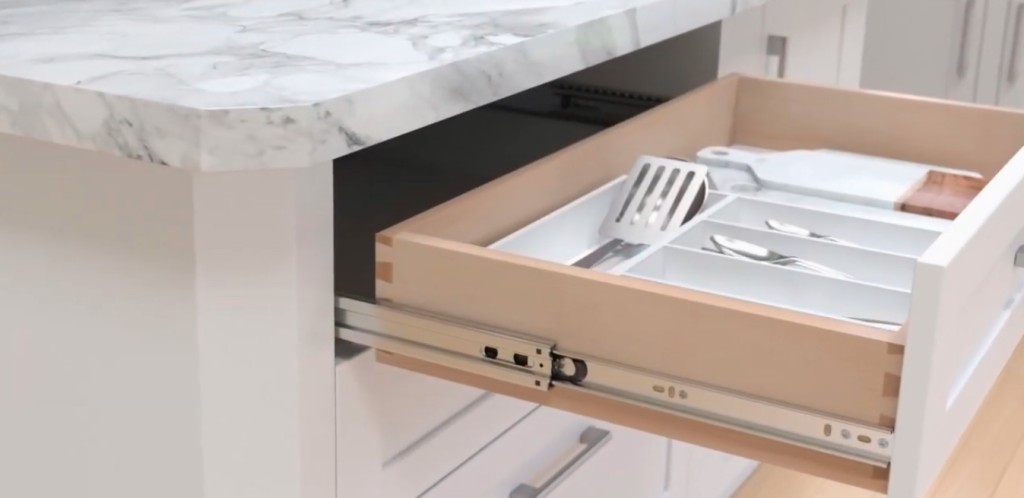
B) Side-Mount Ball Bearing Slides
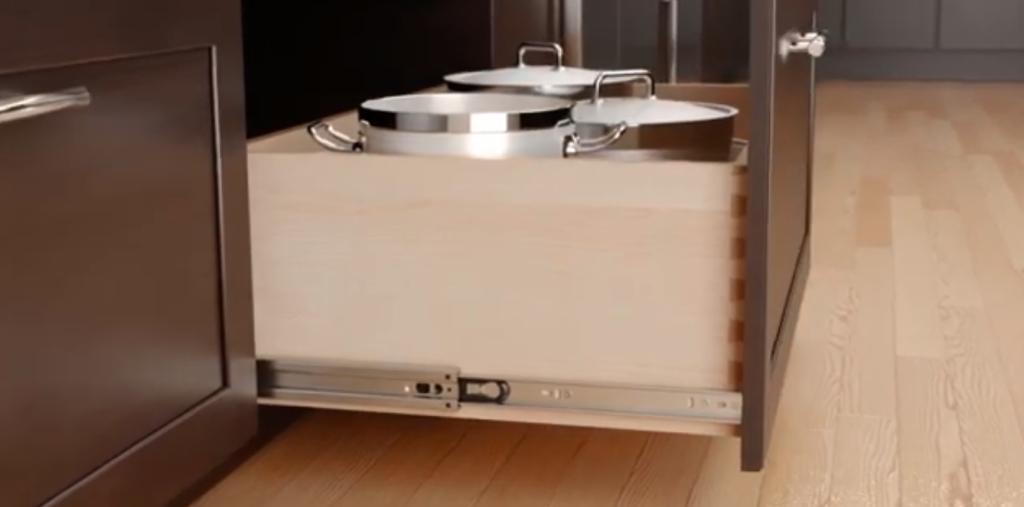
- Metal slides mounted to drawer sides
- Visible when drawer is open
- Smooth rolling action
- Available with or without soft close
Upgrade options: Replace with improved ball bearing slides or soft-close versions
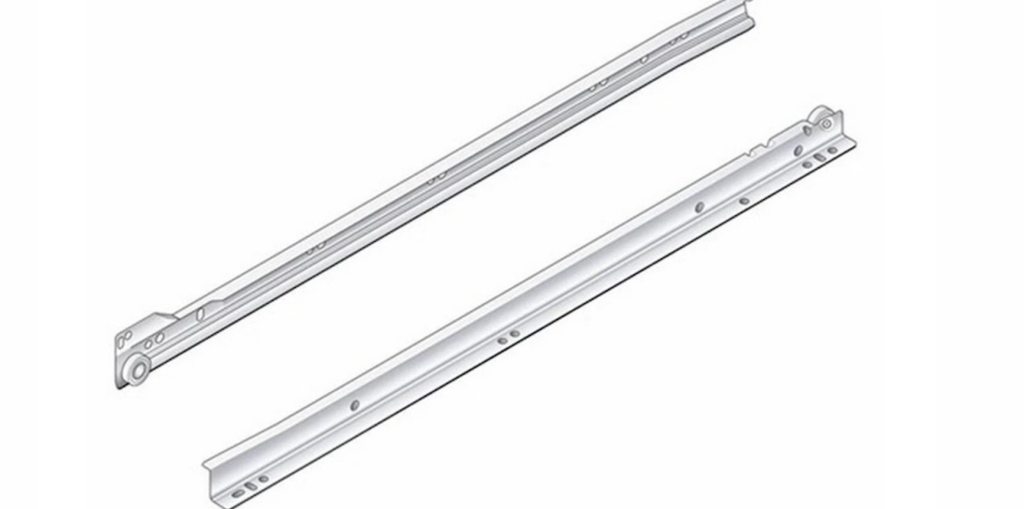
C) Epoxy Roller Slides (Euro Slides)
- Usually white or cream colored
- Nylon wheel rollers
- Budget friendly
- Often found in older cabinets
Upgrade options:
- Replace with new epoxy slides
- Upgrade to ball bearing slides
- Add soft-close adapters (if compatible)
Step 2: Measure the Drawer Box
Accurate measurements determine which slide type fits.
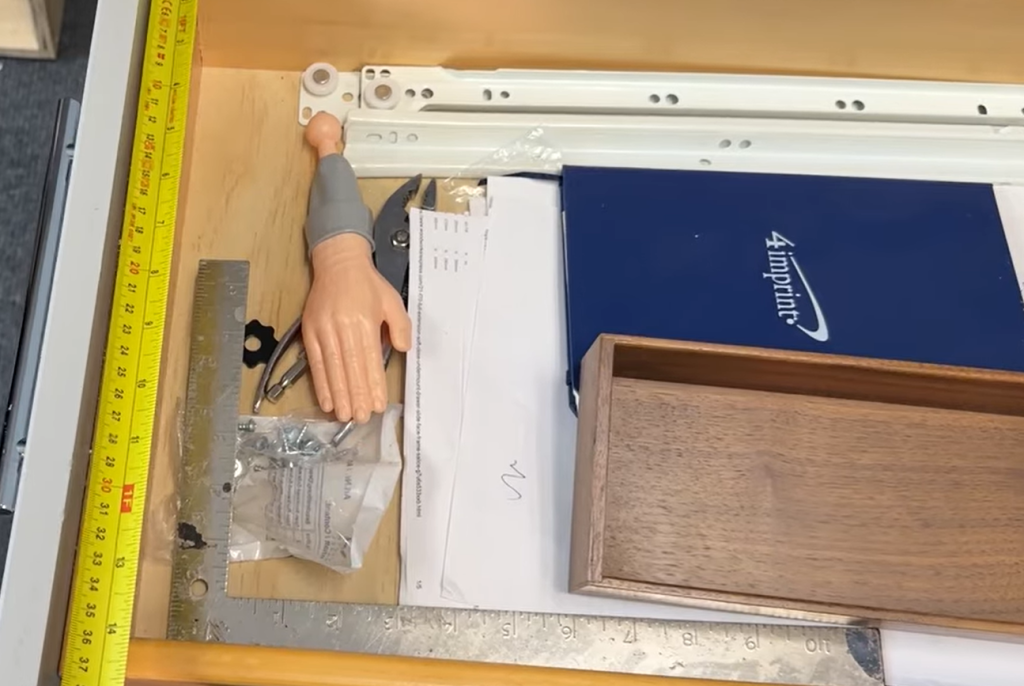
Measure Drawer Width
Measure the outside width of the drawer box from side to side.
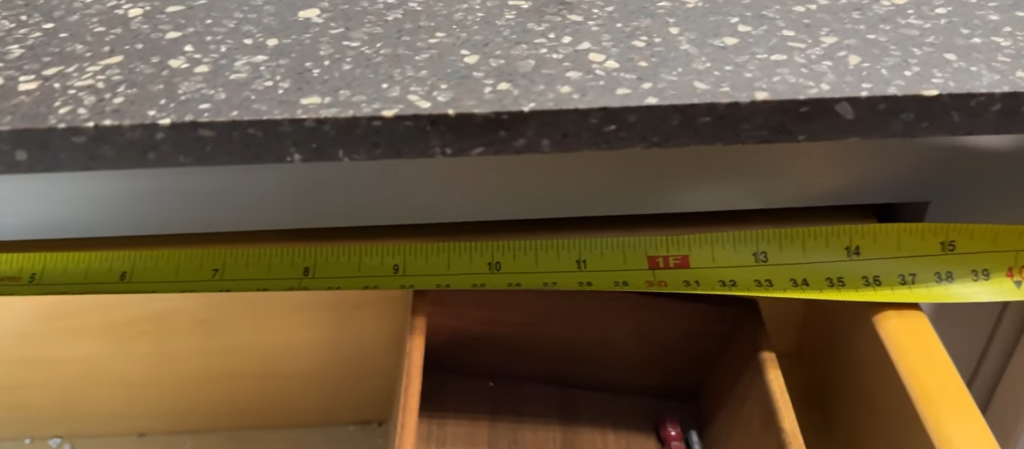
Measure Cabinet Opening Width
Measure the inside width of the cabinet opening where the drawer sits.
Calculate Side Clearance
Subtract drawer width from cabinet opening width.
Then divide the result by two.
Example:
- Drawer box: 14-1/2 in
- Cabinet opening: 15 in
- Total clearance: 1/2 in
- Clearance per side: 1/4 in
This clearance determines your slide options.
Step 3: Match Clearance to Slide Type
1/4 in Clearance Per Side
➡️ Typically requires undermount slides
These slides sit underneath, so they need minimal side space.
1/2 in Clearance Per Side
➡️ Designed for side-mount or epoxy slides
This is the standard requirement for most ball bearing slides.

Important Upgrade Limitation
You usually cannot switch from side-mount or epoxy slides to undermount slides without new drawer boxes.
Undermount systems require:
- Specific drawer dimensions
- Notches or holes at the back
- Proper bottom thickness
- Precise tolerances
If you want hidden slides, consider ordering custom drawer boxes built for undermount hardware.
Step 4: Choose the Right Replacement
Replace Like-for-Like (Simplest Option)
Buy the same type and length as your current slides.
Look for part numbers stamped on old hardware. Epoxy slides often have markings that help identify replacements.
Upgrade to Soft Close
If your drawers slam shut, soft close is a worthwhile upgrade.
Options include:
- Soft-close ball bearing slides
- Soft-close undermount slides
- Add-on dampers for some epoxy systems
Upgrade for Performance
Consider these improvements:
- Full extension for complete drawer access
- Higher weight rating for heavy items
- Better durability for daily use
- Smoother operation
Step 5: Remove the Old Slides
- Empty the drawer completely
- Pull drawer fully open
- Lift or release disconnect levers
- Remove the drawer from cabinet
- Unscrew slides from drawer box
- Unscrew cabinet members
Keep screws if they are reusable.
Step 6: Install the New Slides
Install Cabinet Members First
- Position slides level and parallel
- Use original mounting holes if possible
- Ensure both sides are at identical height
Install Drawer Members
- Align with cabinet slides
- Keep straight and square
- Fasten securely
Reinsert the Drawer
Slide the drawer back into the cabinet until it locks or clicks into place.
Test movement several times.

Step 7: Test and Adjust
Check for:
- Smooth opening and closing
- Proper alignment
- Even gaps
- Full extension
- Soft-close engagement
Make minor adjustments as needed.
When You Should Replace the Drawer Box Too
Consider new drawer boxes if:
- Switching to undermount slides
- Existing drawers are damaged
- Drawer bottoms sag
- You want a premium upgrade
Custom drawer boxes built for modern hardware can dramatically improve function and durability.
Quick Upgrade Recommendations for Kitchens
For most homeowners, the best improvements come from:
- Soft-close functionality
- Full extension access
- Higher load capacity
- Hidden undermount hardware (if drawers allow)
Final Takeaway: Replacing Drawer Slides
Replacing drawer slides is a manageable DIY project that delivers outsized results. The key is measuring correctly and choosing a slide type that matches your cabinet’s existing clearances.
If you want the easiest path, replace what you already have. If you want a major upgrade, soft-close slides or new drawer boxes can transform how your kitchen feels every day.
Need Help Choosing?
Woodworker Express offers a wide selection of drawer slides, soft-close systems, and custom drawer boxes to match virtually any cabinet configuration. Whether you want a quick fix or a full upgrade, the right hardware makes all the difference.