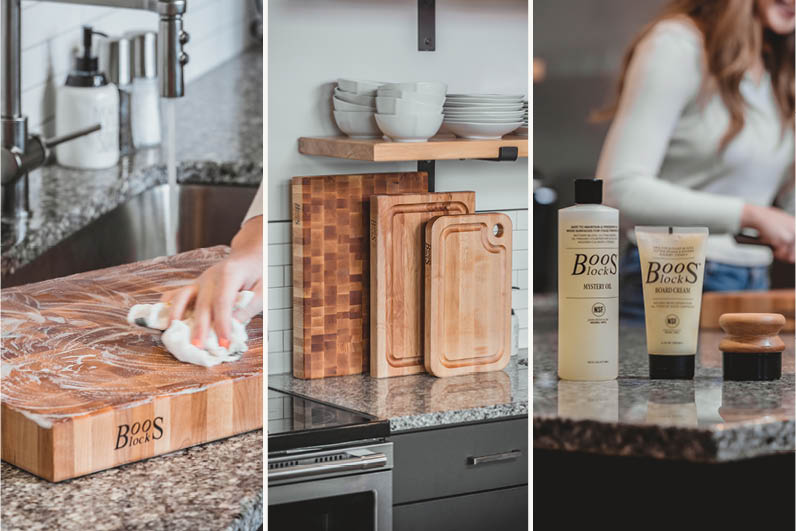

A wood cutting board is one of the most used tools in any kitchen. From slicing vegetables to carving meat, it handles constant contact with food and moisture. Proper cleaning keeps it sanitary and protects the wood so it lasts for years.
Premium hardwood boards, including those made by John Boos, are built to last decades when properly maintained. With the right cleaning and conditioning routine, your board will remain safe, beautiful, and functional for everyday cooking.
Why Proper Cutting Board Care Matters
Wood is a natural material that can absorb moisture if not cared for properly. Without regular cleaning and maintenance, this can lead to:
- Lingering food odors
- Stubborn stains
- Bacterial buildup
- Cracking or warping
The good news is that wood cutting boards are easy to maintain with a simple routine of washing, sanitizing, and oiling.
First Step: Preparing a New Wood Cutting Board
Before using a new wood cutting board for the first time, it should be properly conditioned.
High quality boards like those from John Boos should be treated with oil to saturate the wood and prevent drying.
How to Prepare a New Board
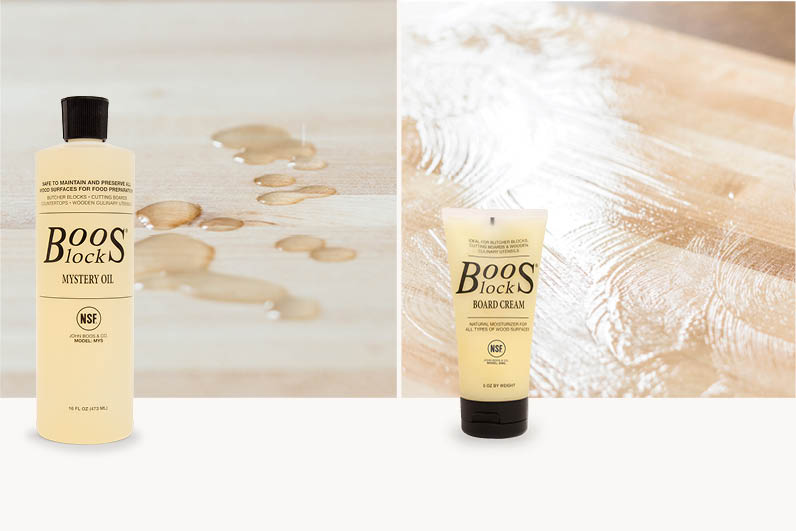
- Apply a generous coat of food grade mineral oil or John Boos Mystery Oil to the entire surface.
- Spread the oil evenly across the board and along the edges.
- Allow the oil to soak in until the wood stops absorbing it.
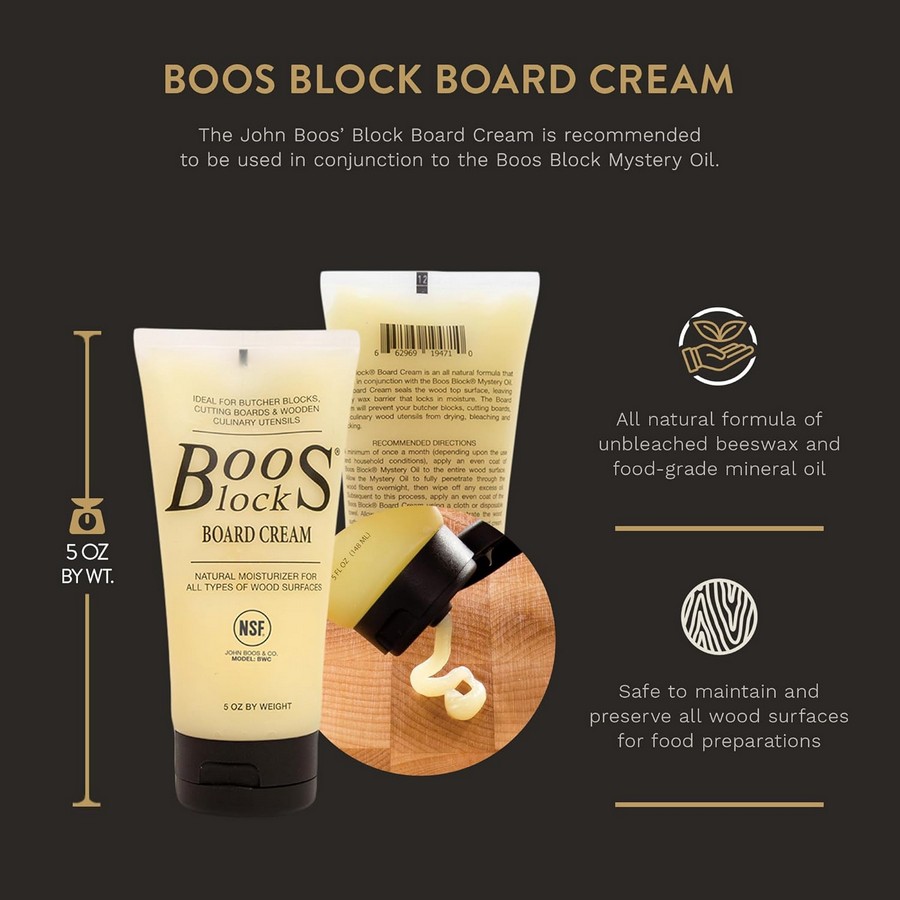
- For extra protection, apply Boos Board Cream after the oil treatment to seal the surface.
This initial treatment protects the wood fibers and helps prevent cracking or moisture damage.
Daily Cleaning: How to Wash a Wood Cutting Board
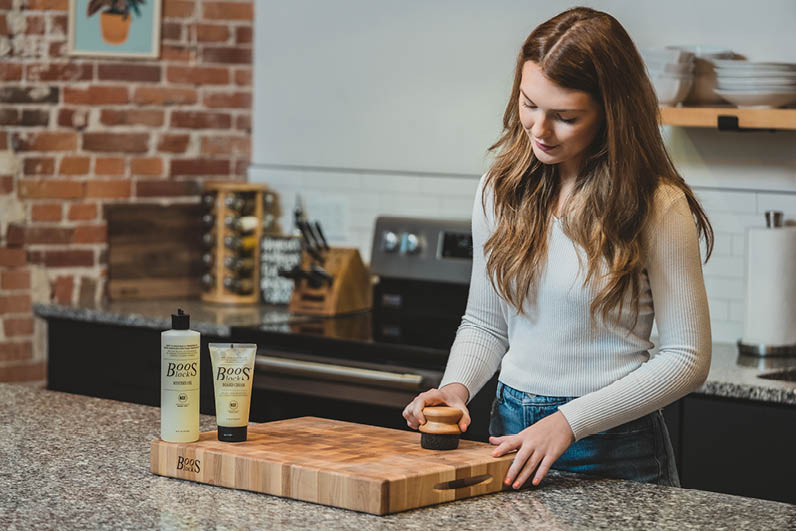
The most important rule for cleaning a wood cutting board is simple: always wash it by hand.
Follow these steps after every use.
- Scrub with Warm, Soapy Water
Use mild dish soap and a non scratch sponge to clean the surface. - Clean Both Sides of the Board
Washing both sides prevents uneven moisture absorption that can cause warping. - Rinse Thoroughly
Remove all soap residue with warm water. - Dry Immediately with a Towel
- Air Dry Upright
Stand the board on its edge so air can circulate on both sides.
What Never to Do With a Wooden Cutting Board
Avoid these common mistakes that can permanently damage a wood cutting board.
- Do not put it in the dishwasher
- Do not soak it in water
- Do not leave it wet on the counter
- Do not store it in damp environments
Excess moisture is the primary cause of splitting, warping, and cracked glue joints.
How to Sanitize a Wood Cutting Board
Regular washing removes most bacteria, but occasional sanitizing helps eliminate odors and microbes.
Natural Vinegar Sanitizing
A simple vinegar solution works well for everyday sanitation.
Steps
- Mix 1 part white vinegar with 2 parts water.
- Spray or wipe the mixture over the board surface.
- Let it sit for a few minutes.
- Rinse and dry thoroughly.
This solution helps neutralize odors and clean the wood without damaging its finish.
Deep Disinfecting After Raw Meat
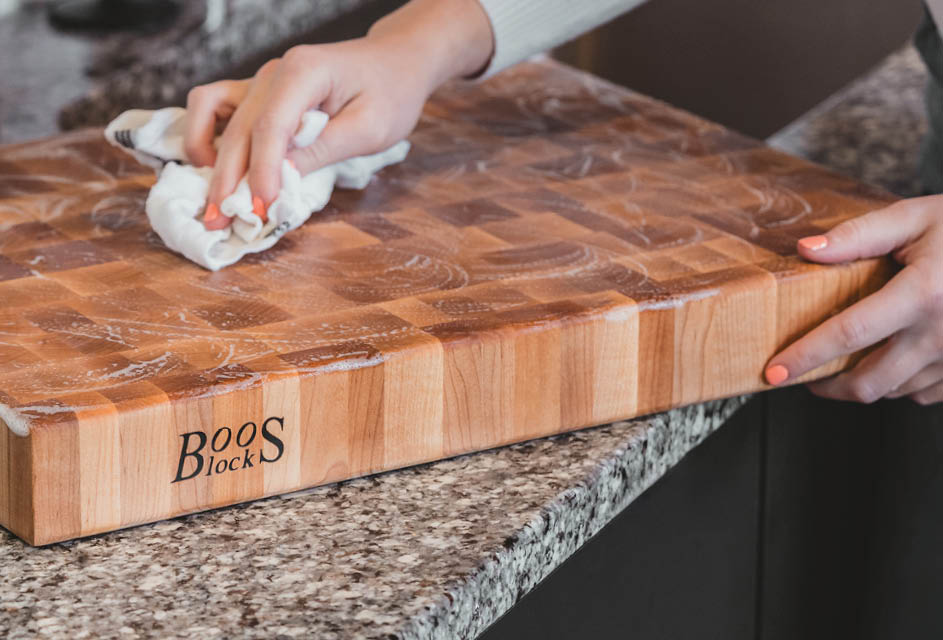
For deep sanitation, many food safety guidelines recommend a diluted bleach solution. However, John Boos recommends natural cleaning solutions like vinegar and proper oiling to protect the wood.
Method
- Mix 1 tablespoon unscented chlorine bleach with 1 gallon of water.
- Apply the solution to the board surface.
- Let it sit for several minutes.
- Rinse thoroughly with warm water.
- Dry immediately.
Many cutting board manufacturers, including John Boos, recommend natural cleaning methods like vinegar and proper oiling to maintain the wood’s integrity.
Removing Stains and Odors
Even well maintained boards can absorb strong smells or develop stains. Natural cleaning methods work best.
Lemon and Salt Method
This is one of the most effective ways to remove garlic, onion, or fish odors.
Steps
- Sprinkle coarse salt over the board surface.
- Cut a lemon in half and use it to scrub the salt into the wood.
- Squeeze slightly to release lemon juice while scrubbing.
- Let the mixture sit for 5 to 15 minutes.
- Rinse thoroughly and dry.
Salt acts as a gentle abrasive while lemon helps break down stains and neutralize odors.
Baking Soda for Tough Stains
For stubborn stains from foods like berries or beets:
- Mix 3 parts baking soda with 1 part water to form a paste.
- Apply the paste to the stained area.
- Scrub gently with a sponge.
- Rinse and dry the board.
Conditioning Your Cutting Board With Oil
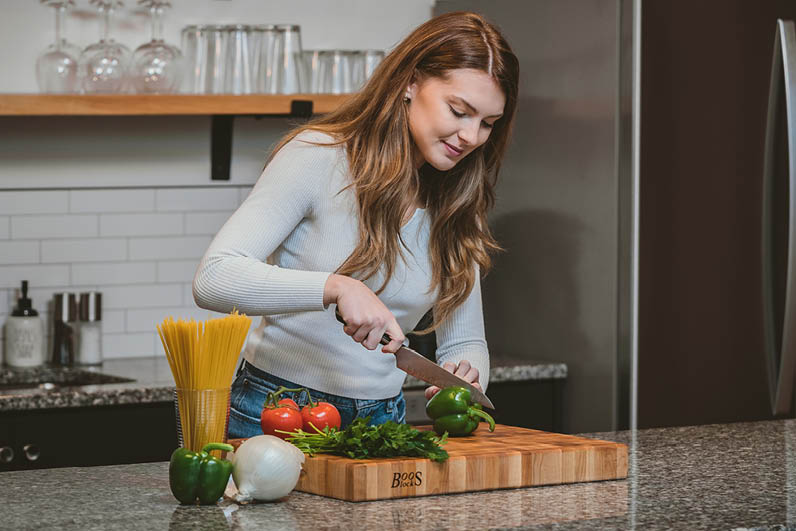
Cleaning keeps your board sanitary. Oiling keeps the wood healthy.
Conditioning prevents the wood from drying out and absorbing moisture or bacteria.
How Often to Oil a Cutting Board
Maintenance frequency depends on how often the board is used.
- Monthly for heavy or daily use
- Every 2 to 3 months for occasional use
If the wood begins to look dry or dull, it is time to oil the board.
Best Oil for Wood Cutting Boards
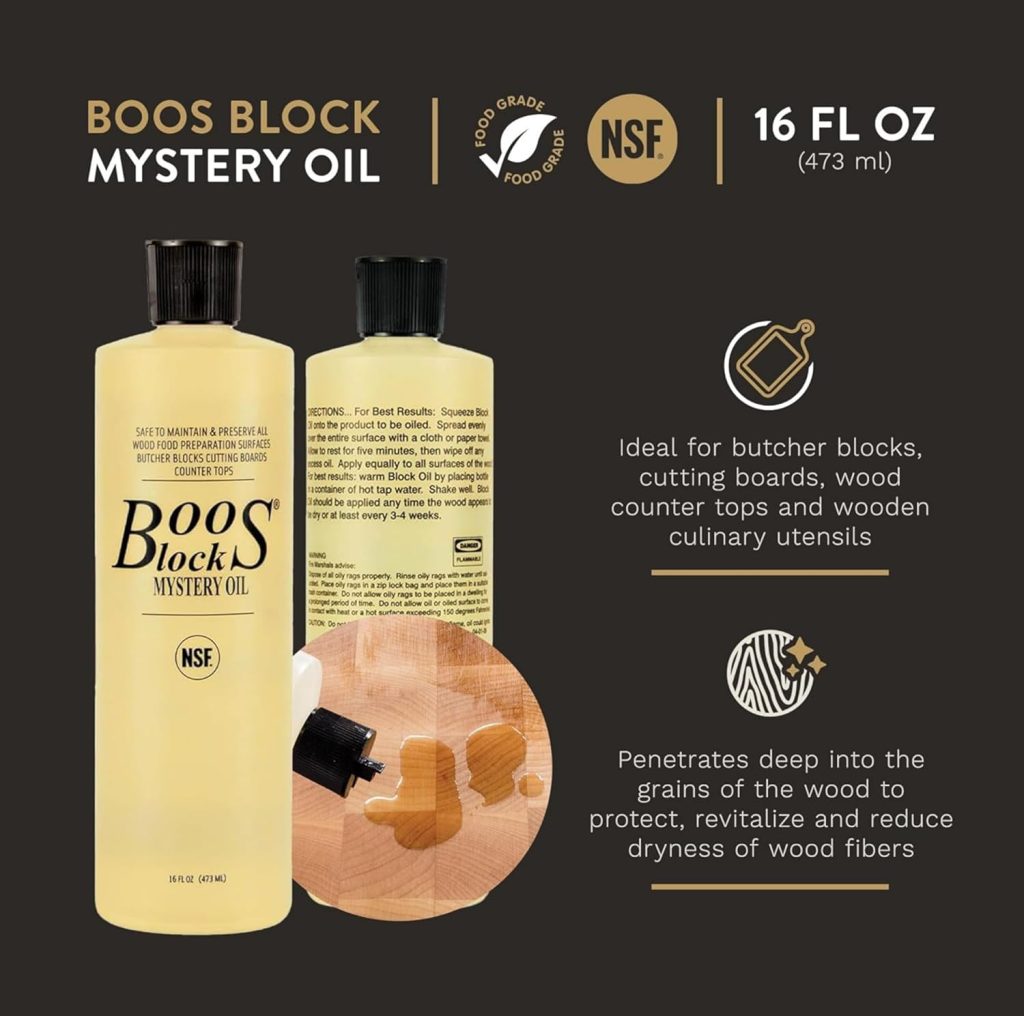
Use food grade mineral oil or a specialized product such as John Boos Mystery Oil.
Avoid cooking oils such as:
- olive oil
- vegetable oil
- canola oil
These oils can turn rancid and create unpleasant odors.
How to Oil a Cutting Board
- Start with a clean, completely dry board.
- Apply a generous layer of oil to the entire surface and edges.
- Spread the oil evenly using a soft cloth.
- Let the oil soak into the wood for at least two hours or overnight.
- Wipe off any excess oil.
For additional protection, apply Boos Board Cream after oiling to create a moisture barrier.
How to Restore a Worn Cutting Board
Over time, knife marks and scratches can appear. Fortunately, wood cutting boards can be restored.
Steps to Refresh a Cutting Board
- Lightly sand the surface with fine grit sandpaper.
- Sand evenly across the grain of the wood.
- Wipe the board clean.
- Apply mineral oil or John Boos Mystery Oil to recondition the wood.
This process can make an older board look nearly new again.
How to Store a Wood Cutting Board
Proper storage helps prevent mold and warping.
Follow these guidelines:
- Always store the board upright or on its edge
- Allow airflow on both sides
- Keep it in a dry, ventilated area
- Avoid letting liquids sit on the board for long periods
Good airflow ensures the board dries evenly after washing.
A Well Maintained Cutting Board Can Last Decades
A wood cutting board is more than just a kitchen surface. It is a durable tool that improves with age when properly cared for.
By following a routine of washing, sanitizing, and oiling, you can keep your board clean, safe, and looking great for years. High quality hardwood boards like those from John Boos are designed to last for decades with proper care and maintenance.
Treat your cutting board well and it will continue to serve as one of the most reliable tools in your kitchen.