
The main difference between soft close and push-to-open drawer slides is how the drawer opens and closes. Soft close slides use a handle and gently pull the drawer shut, while push-to-open slides open with a press on the drawer front and support handle-free, modern cabinetry.
After reviewing homeowner feedback, installer experience, and real world use cases, this guide breaks the decision down clearly so you can choose with confidence.
Soft Close vs Push-to-Open Drawer Slides Summary
| Feature | Soft Close Drawer Slides | Push to Open Drawer Slides |
|---|---|---|
| Opening method | Pull handle or knob | Push drawer front |
| Closing action | Automatic soft close | Standard or soft close depending on system |
| Ease of use | Very intuitive | Slight learning curve |
| Best cabinet styles | Traditional, transitional, modern | Modern, minimalist, handle-free |
| Typical cost range | Lower to mid range | Mid to premium |
| Maintenance and adjustment | Minimal | Moderate depending on system |
What Are Soft Close Drawer Slides?
Soft close drawer slides use a built in damper to slow the drawer just before it closes. Instead of slamming shut, the drawer gently pulls itself closed the last few inches.
Why Homeowners like Soft Close Drawer Slides
Soft close is popular because it improves daily use without changing how drawers look or function.
Quiet Operation
Soft close eliminates slamming. This matters in open floor plans, late night kitchens, and homes with children.
Prevents Damage
By controlling the closing motion, soft close reduces wear on drawer boxes, cabinet frames, and hardware.
Family Friendly
Soft close lowers the risk of pinched fingers and makes drawers easier for kids and older adults to use.
Long Term Durability
The controlled motion reduces stress on hardware, which can extend the life of the slide and the cabinet.
When Soft Close is the Better Choice
Soft close drawer slides are ideal when you want an upgrade that feels premium but stays familiar. They work well in homes with traditional or transitional design, busy kitchens, rental properties, and projects where simplicity matters.
If you prefer a drawer that behaves exactly how you expect every time, soft close is hard to beat.
What Are Push-to-Open Drawer Slides?
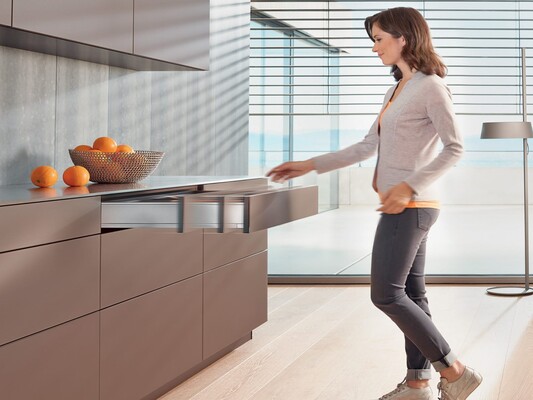
Push-to-Open drawer slides allow you to open a drawer by pressing on the front instead of pulling a handle. A spring or mechanical release pushes the drawer outward once pressure is applied.
Two Types of Push to Open Systems
Standard Push to Open
These systems open with a push but close manually. There is no soft close damping, so the drawer closes like a standard slide.
Push to Open Soft Close
These combine push-to-open opening with soft close closing. The drawer opens with a push and closes gently without slamming.
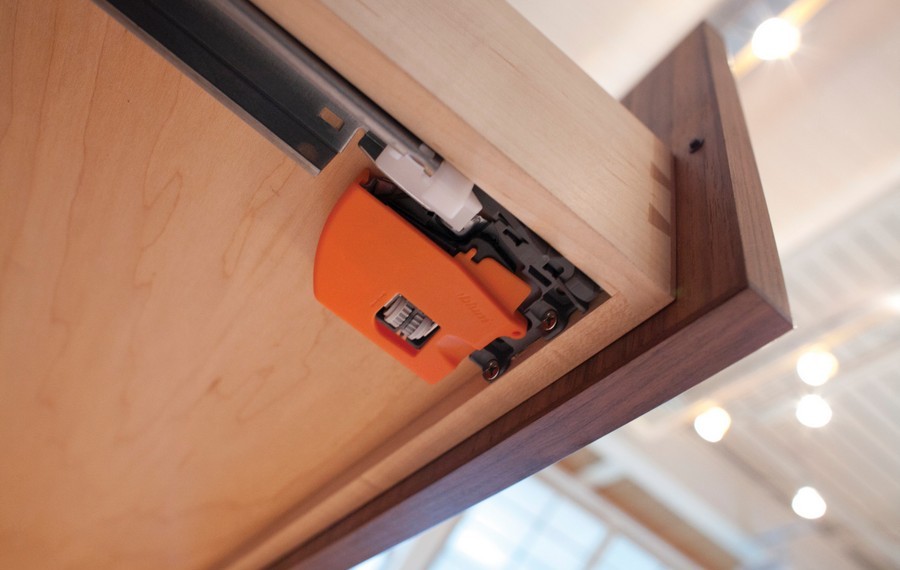
Some systems are fully integrated, like pure mechanical designs from Salice. Others use add on components paired with existing slides, such as Blum TIP ON BLUMOTION or Grass Tipmatic.
Why Homeowners Choose Push to Open Drawer Slides
Handle-Free Cabinets
Push to open enables clean, modern design without knobs or pulls.
Modern Drawer Slides Feel
The experience feels intentional and high end, especially in contemporary kitchens.
Hands Free Convenience
You can open drawers with an elbow or knee when your hands are full.
When Push-to-Open Makes Sense
Push-to-Open drawer slides shine in minimalist spaces, modern kitchens, and custom furniture where visual simplicity matters as much as function.
They require more precise installation and adjustment, but the design payoff is significant.
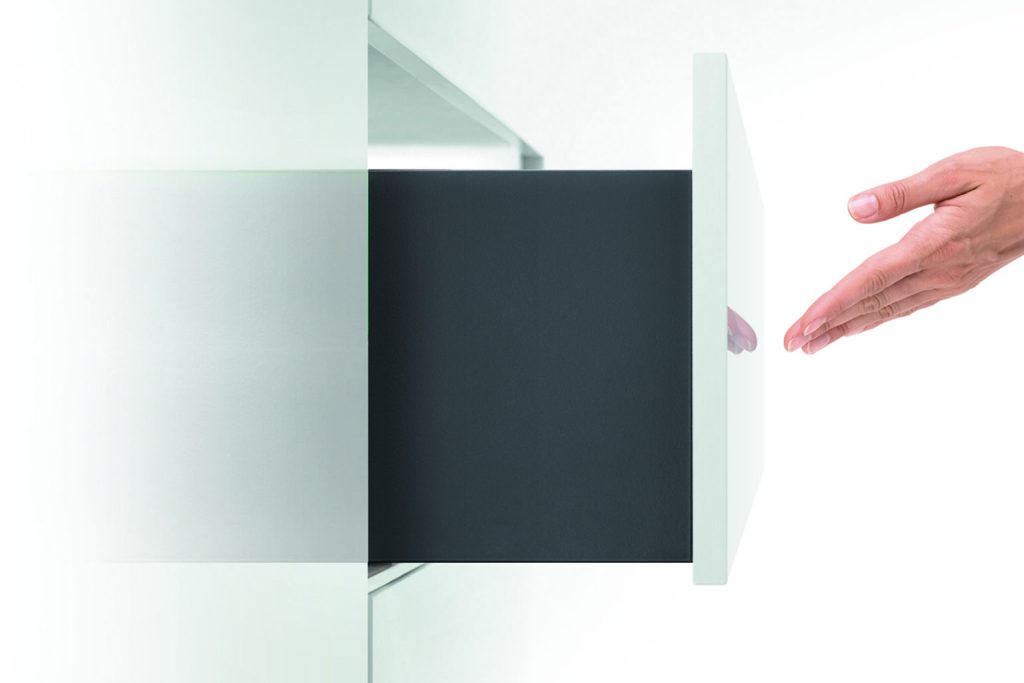
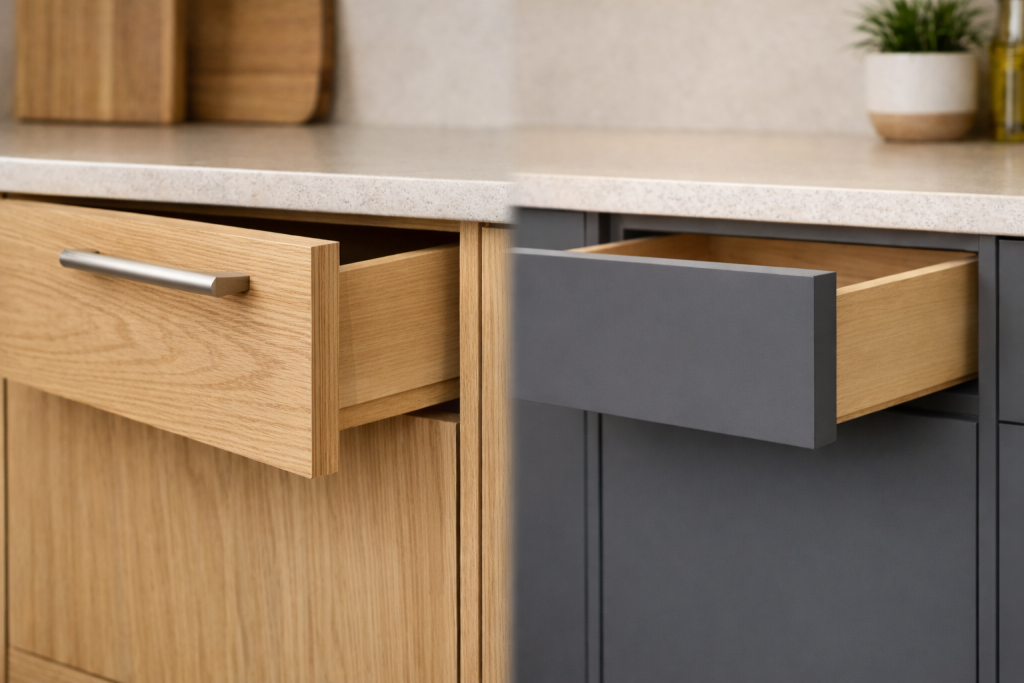
Side by Side Comparison: Soft Close vs Push to Open
Everyday Usability
Soft close drawers feel natural. Pull to open. Push to close. No learning curve.
Push to open drawers require a deliberate press. Some users love the interaction. Others need time to adjust, especially guests or kids.
Accidental Opening Risk
Soft close drawers stay shut unless pulled.
Push to open drawers can open if bumped, especially in high traffic areas. Proper adjustment reduces this, but it is still a factor to consider.
Accessibility and Mobility
Soft close works well for all users and requires minimal force.
Push to open can be helpful when hands are full, but it requires enough pressure to activate the mechanism. This may be less ideal for users with limited strength.
Visual Design Impact
Soft close supports any cabinet style but does not change the look.
Push to open enables handle-free cabinets, which is a major design upgrade for modern homes.
Installation Complexity
Soft close slides are straightforward to install and forgiving.
Push to open systems demand precise alignment. Add on systems require tuning to balance opening force and soft close resistance.
Which One Is Better for Your Home?
Best for Families and High Traffic Kitchens
Soft close drawer slides are the safer and more predictable choice. They reduce noise, prevent slamming, and work reliably even with heavy daily use.
Best for Modern and Minimalist Design
Push-to-Open drawer slides win here. If your goal is handle-free cabinets and clean lines, push to open is the right solution.
Best for Bathrooms and Furniture
Both options work well. Soft close is great for bathroom vanities and guest spaces. Push-to-Open works beautifully in furniture, nightstands, and floating cabinetry.
Best for Budget Conscious Remodels
Soft close drawer slides typically cost less and require less installation time. They offer excellent value without sacrificing quality.
Final Recommendation: Soft Close vs Push-to-Open Drawer Slides
There is no wrong choice between soft close and push-to-open drawer slides. Both are proven, reliable upgrades when matched to the right project.
Choose soft close drawer slides if you want quiet, dependable performance with universal appeal.
Choose push to open drawer slides if modern design and handle-free cabinets are central to your vision.
If you want help choosing a push to open system, see our guide to 4 Best Push to Open Soft Close Drawer Slides. When you are ready, browse the full selection of drawer slides on Woodworker Express to find the right fit for your home.