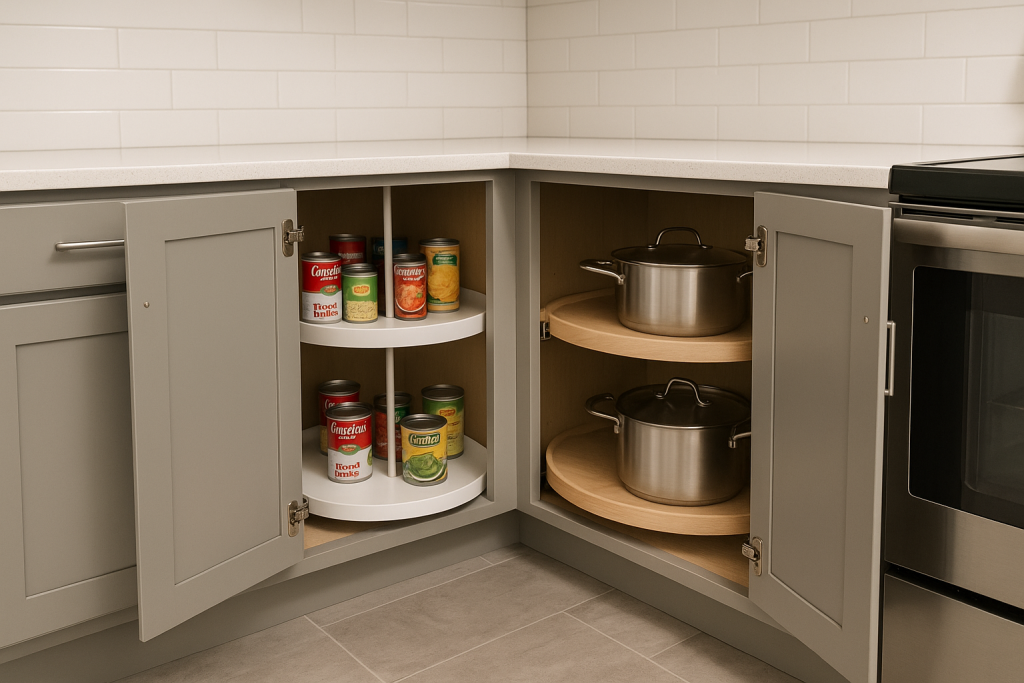

Corner cabinets can be puzzling for homeowners and cabinet shops alike. They create deep, awkward spaces that are hard to access and often wasted. That’s where rotating shelf systems like Lazy Susans and Super Susans come in. These solutions transform dead space into usable storage. But though they aim for the same goal, they serve different needs.
The main difference between a Lazy Susan and a Super Susan is the hardware. A Lazy Susan uses a central pole and rotating shelves that can wobble under weight. A Super Susan uses fixed shelves with rotating bearings mounted to the cabinet base, offering better stability and load capacity.
Quick Skim Summary: Lazy Susan vs Super Susan
| Category | Lazy Susan | Super Susan |
|---|---|---|
| Shelf Mounting Method | Rotating around a central pole | Rotating trays on fixed shelves (no pole) |
| Space Efficiency | Reduced usable space due to center pole | Maximized usable space — better for bulky items |
| Load Capacity | Good for light to moderate loads | Better for heavy and bulky items (pots, appliances) |
| Installation Cost and Effort | Lower cost, simpler install | Higher cost, more involved install |
| Access and Functionality | One or two rotating shelves; decent for everyday small items | Multiple independently rotating shelves; better organization and access |
| Best Use Case | Lightweight items such as canned goods, spices, small containers | Heavy cookware, appliances, large kitchenware |
Lazy Susan: Simple, Affordable, and Often Enough
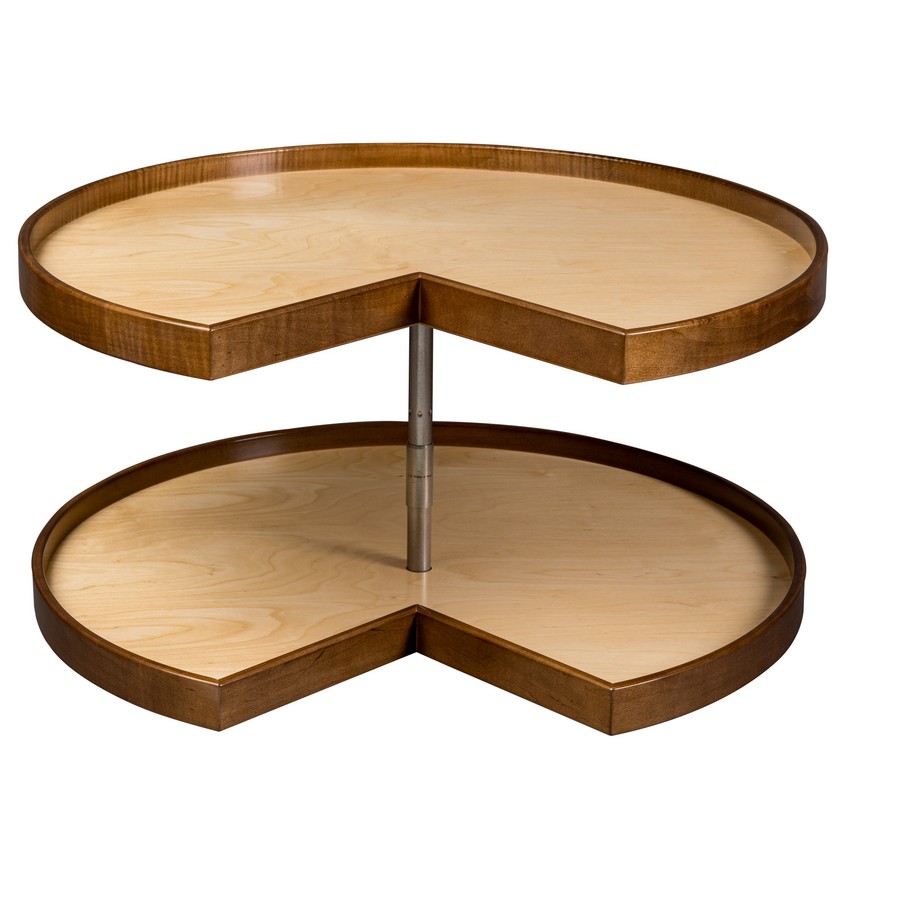
A Lazy Susan mounts to a vertical pole inside the cabinet. Pie or kidney-shaped shelves spin around that pole. As you rotate the shelf, items from the back of the cabinet swing toward the door, making it easier to reach things. This design is straightforward, and generally affordable, which makes it a popular pick for basic kitchen storage.
Lazy Susans shine when you’re storing lighter items; canned food, spices, small containers, or everyday kitchen supplies. With fewer heavy loads, the shelf spins smoothly and performs well. For many households or rental-property kitchens, a Lazy Susan is a perfectly reasonable solution.
However, the central pole can restrict usable space. Large pots, small appliances, or bulky items may not fit well. Under heavier loads the rotation can feel wobbly or uneven. For limited storage needs, especially light loads, a Lazy Susan is convenient and cost-effective.
Super Susan: Max Capacity, Stability, and Heavy-Duty Use
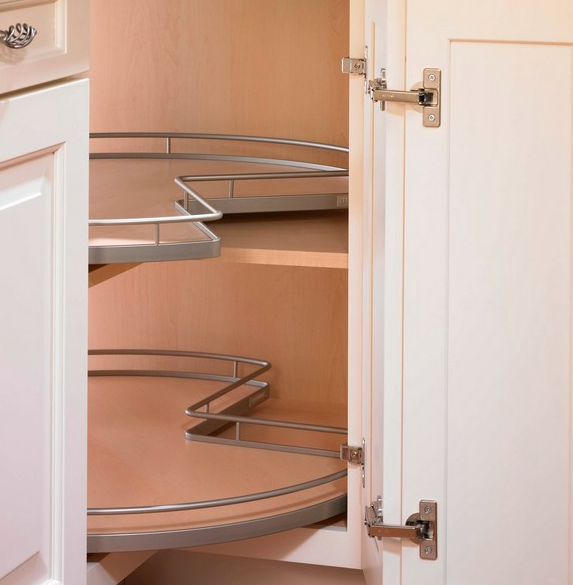
A Super Susan is built differently. Instead of a center pole, each shelf rides on fixed shelf supports and rotates independently via ball-bearing hardware. Without a pole, the space inside the cabinet becomes far more usable. Ideal for bulky pots and pans, mixers, or even small appliances.
Because each shelf rotates independently, you get better organization. You can store heavy items lower, lighter items higher, or arrange by frequency of use. The robust hardware handles heavier loads far better than traditional Lazy Susan setups. For homeowners or cabinet shops designing kitchens meant for serious cooking or long-term use, Super Susans deliver more functionality and durability.
That said, Super Susans are more expensive and require more precise cabinet specs. Depth and width must be sufficient, and door clearance must account for shelf rotation. Installation tends to be more involved. But for kitchens where storage counts, or cabinets expected to hold heavy cookware, the added cost and complexity often make sense.
Choosing the Right Shelf System: Lazy Susan vs Super Susan
When deciding between Lazy Susan and Super Susan, consider these questions:
- What do you plan to store?
- Light items like canned goods favor a Lazy Susan. Heavy pots, pans, or appliances point to a Super Susan.
- How much storage space do you want inside the cabinet?
- If maximizing volume and accessibility matters, Super Susan wins.
- What is your budget?
- If cost is a key factor and storage need is modest, Lazy Susan offers a functional, affordable solution.
- Does your cabinet layout support rotating trays (door clearance, cabinet depth/width)?
- If yes, Super Susan can deliver long-term value.
Bottom Line: Lazy Susan vs Super Susan
Lazy Susans remain a solid choice for basic storage and light kitchen items. They are cost-effective, easy to install, and do the job for simple needs. But if you need your corner cabinet to hold heavy, bulky kitchenware, or want every cubic inch of storage utilized, a Super Susan offers superior space efficiency, load capacity, and long-term durability.
For homeowners and cabinet shops alike, matching your storage goals to the right hardware makes the difference between a corner cabinet you dread and one you rely on every day.