
Choosing the right cabinet pull length feels simple until you are standing in front of dozens of options. Length affects how your cabinets look, how they feel in daily use, and whether the finished space looks intentional or slightly off.
This guide explains how to choose cabinet pull length with confidence, whether you are updating a kitchen, building custom cabinets, or refreshing a bathroom or closet.
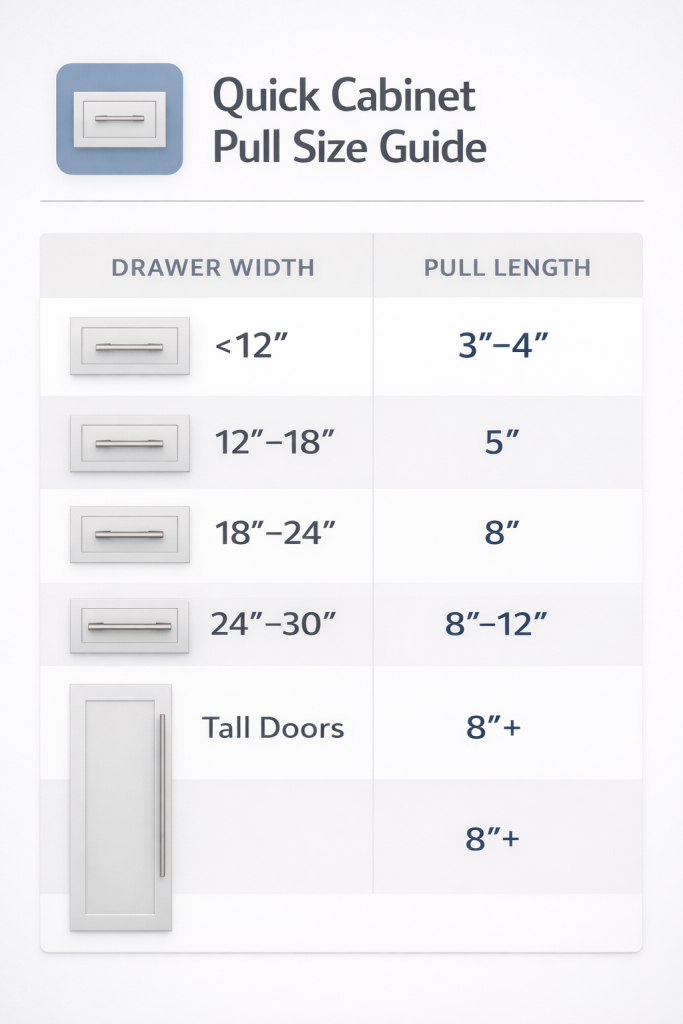
Quick Skim: Cabinet Pull Length Size Guide
| Cabinet or Drawer Size | Recommended Cabinet Pull Length |
|---|---|
| Drawers under 12 inches wide | 3 inch to 4 inch pulls |
| Drawers 12 to 18 inches wide | 5 inch pulls |
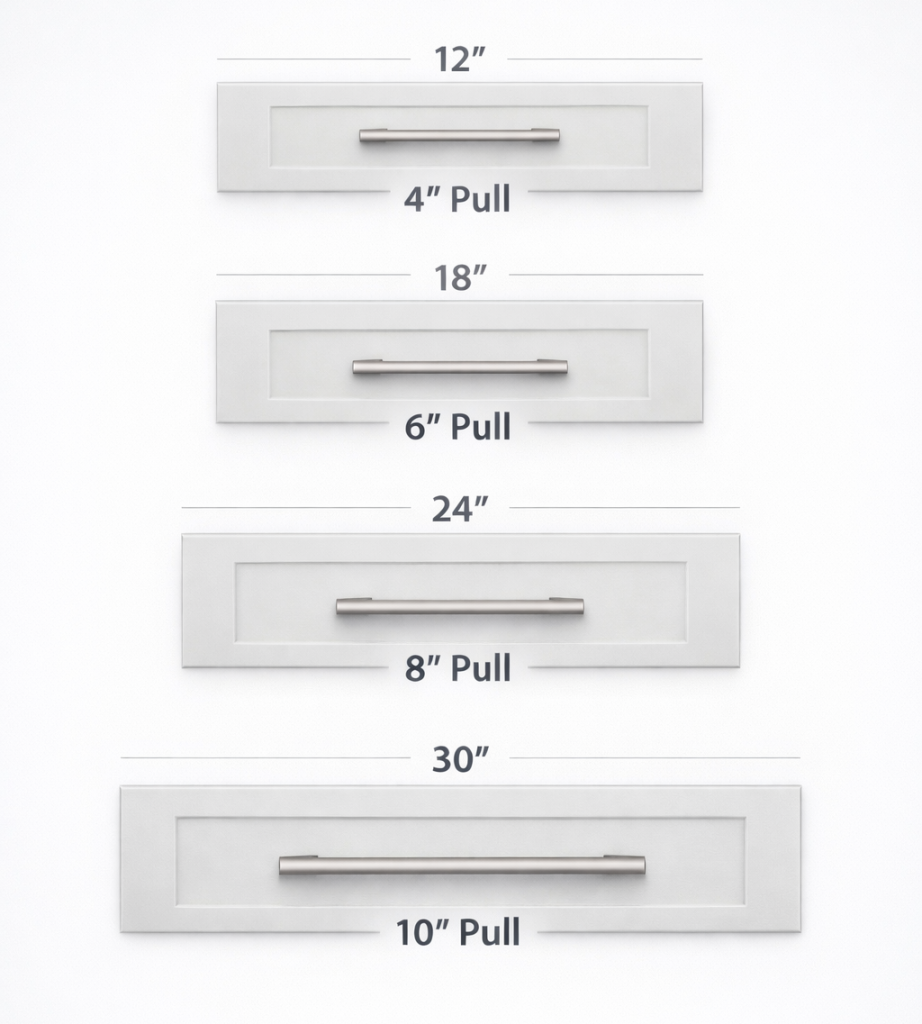
| Drawers 18 to 24 inches wide | 8 inch pulls |
| Drawers 24 to 30 inches wide | 8 inch to 12 inch pulls |
| Tall cabinet doors or pantry doors | 8 inch pulls or longer |
This quick skim table gives readers an immediate answer, while the sections below explain when and why to adjust pull length based on style, proportion, and use.
Why Cabinet Pull Length Matters
Cabinet pull length influences both function and design. From a functional standpoint, the pull needs enough grip area to open drawers and doors comfortably, even when hands are wet or full. From a design perspective, the pull should feel proportional to the cabinet or drawer face. A pull that is too short can look dated or underpowered. A pull that is too long can overpower the cabinet and disrupt visual balance.
When cabinet hardware sizing is done right, pulls fade into the design in the best way possible. They feel natural to use and visually support the cabinetry instead of competing with it.
Standard Cabinet Pull Lengths and When to Use Them
Most cabinet pulls fall into a few common size ranges. These sizes are measured by center to center hole spacing, not the overall length.
3 inch to 4 inch pulls
These are often used on small drawers, narrow cabinets, and traditional designs. They work well on bathroom vanities, furniture pieces, and upper cabinets with smaller doors.
5 inch to 6 inch pulls
This range suits medium drawers and cabinet doors. It is common in transitional kitchens where the goal is balance rather than bold contrast.
8 inch pulls
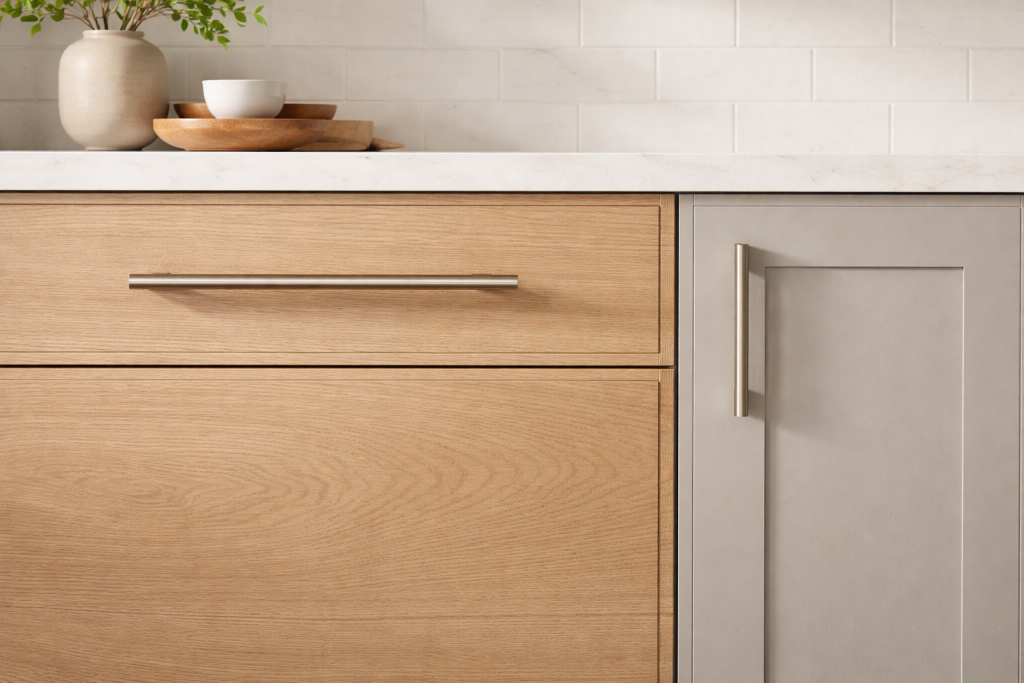
Eight inch pulls are a popular choice for modern kitchens. They work well on base cabinet drawers, trash pull outs, and wide doors where a shorter pull might look undersized.
10 inch to 12 inch pulls and larger
Longer pulls create a clean, contemporary look. They are often used on wide drawers, pantry doors, and slab style cabinetry. These sizes also improve ergonomics on heavy drawers.
The key is not choosing a size in isolation. Pull length should always relate to cabinet width and drawer height.
How Cabinet Width and Drawer Height Affect Pull Length
Cabinet pull length should scale with the size of the surface it is mounted on. A simple rule of thumb helps guide most decisions.
For drawers, choose a pull that is about one third of the drawer width. For example, a 24 inch wide drawer often looks best with an 8 inch pull. A 30 inch drawer can support a 10 inch or 12 inch pull without looking oversized.
For cabinet doors, height matters more than width. Tall pantry doors and appliance panels benefit from longer pulls that provide leverage and visual continuity. Short upper cabinet doors typically look better with shorter pulls to avoid crowding the panel.
This relationship between drawer pull length and cabinet size is what gives kitchens and built ins a polished, custom feel.
One Pull vs Two Pulls on Wide Drawers
Wide drawers present a common decision point. Should you use one long pull or two shorter pulls?
One long pull
A single long pull creates a clean, modern look. It is easier to install and provides a consistent grip point across the drawer. This option works especially well for slab front drawers and contemporary kitchens.
Two shorter pulls
Using two pulls can suit traditional or furniture style cabinetry. It can also make sense on very wide drawers where a single pull would need to be extremely long. Two pulls provide symmetry and reduce the reach distance for users.
In most modern kitchens, one longer pull is preferred. In classic or decorative spaces, two pulls can reinforce the design style.
Modern vs Traditional Sizing Conventions
Design style plays a major role in how cabinet pull size is perceived.
Traditional and classic kitchens
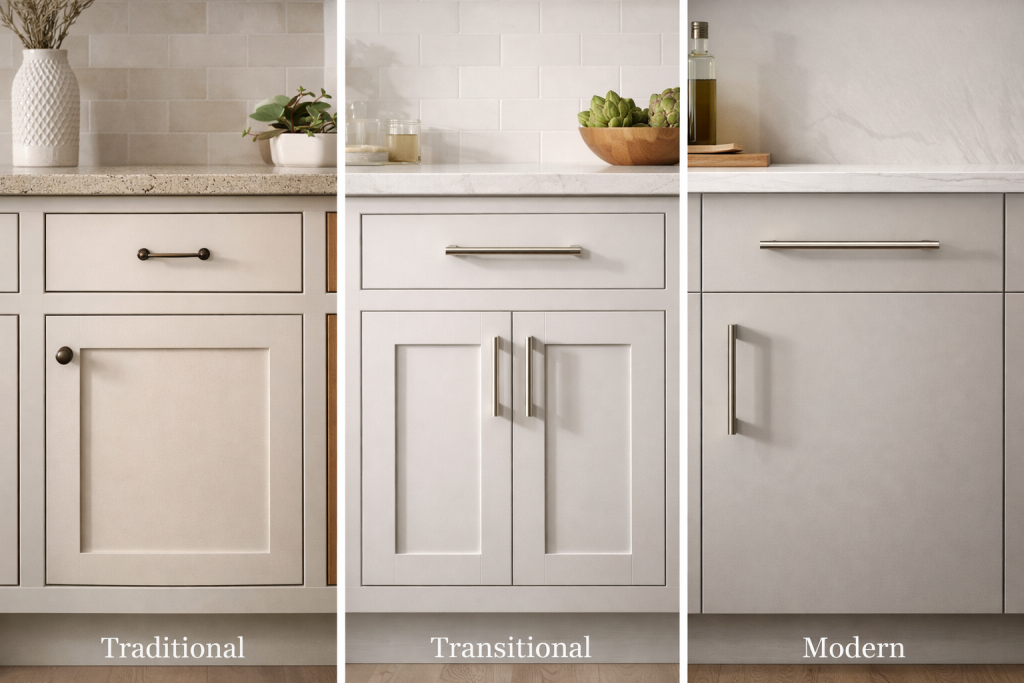
Shorter pulls and knobs dominate. Pulls often sit in the 3 inch to 5 inch range. The goal is subtlety and ornamentation rather than visual impact.
Transitional kitchens
Mid length pulls around 5 inch to 8 inch strike a balance between old and new. They feel updated without pushing into a bold modern look.
Modern and contemporary kitchens
Longer pulls are the norm. Eight inch pulls and larger are common, even on relatively small drawers. This approach emphasizes clean lines and horizontal flow.
Understanding these conventions helps you choose pulls that align with the overall design language of the space.
When Oversized Pulls Make Sense
Oversized pulls are not just a trend. They serve real functional and visual purposes when used intentionally.
They work well on large drawers that hold heavy items like pots, pans, or recycling bins. The added length improves leverage and comfort.
They also make sense in minimalist kitchens where hardware is one of the few visible design elements. Longer pulls become a deliberate feature instead of a background detail.
Oversized pulls can even unify mixed cabinetry layouts by creating strong visual lines across drawers and doors.
The mistake is using oversized pulls randomly. Consistency is critical. If you go long, commit to it across the space.
Common Mistakes to Avoid When Choosing Pull Length
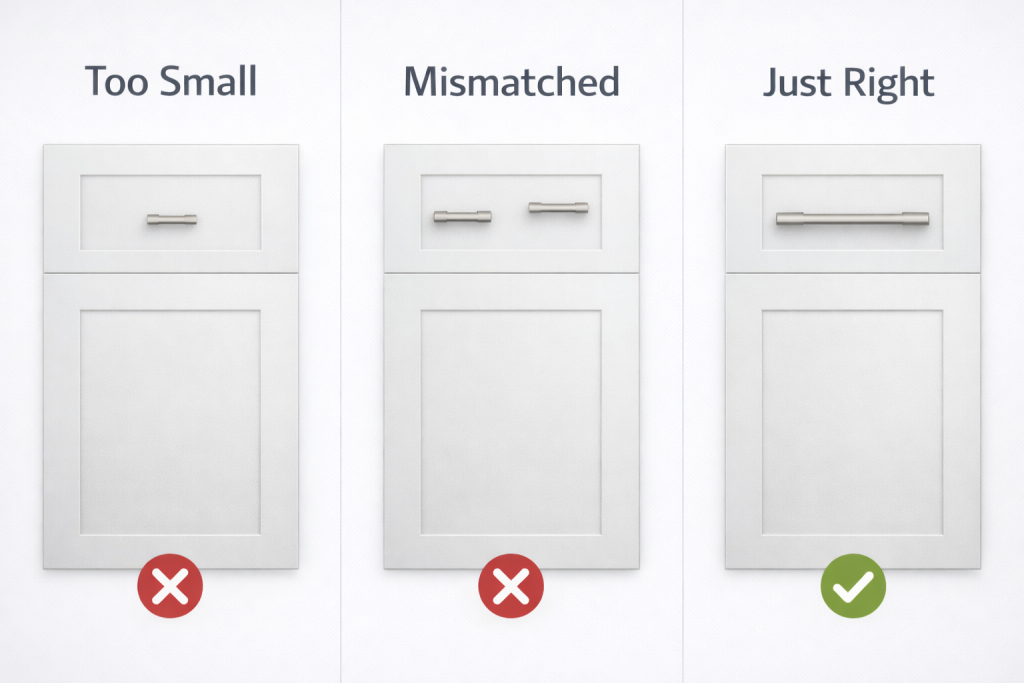
One of the most common mistakes is choosing pulls based on looks alone without considering cabinet size. A pull that looks great in your hand may look awkward once installed.
Another mistake is mixing too many pull lengths without a clear pattern. While variation can work, it should feel intentional. Random sizing often reads as a mistake rather than a design choice.
Ignoring door height is another issue. Short pulls on tall doors can feel unbalanced and awkward to use.
Finally, do not forget hole spacing. Replacing existing hardware without matching hole spacing can turn a simple upgrade into a larger project.
Final Takeaway: How to Choose Cabinet Pull Length
Choosing the right cabinet pull length comes down to proportion, comfort, and consistency. Match pull length to cabinet size, respect the design style, and avoid unnecessary variation. When in doubt, sizing slightly larger often looks more modern and feels better in daily use.
Woodworker Express offers a wide range of cabinet pulls in multiple lengths, finishes, and styles, making it easy to apply these guidelines with confidence. When pull length feels intentional, the entire space feels finished.